
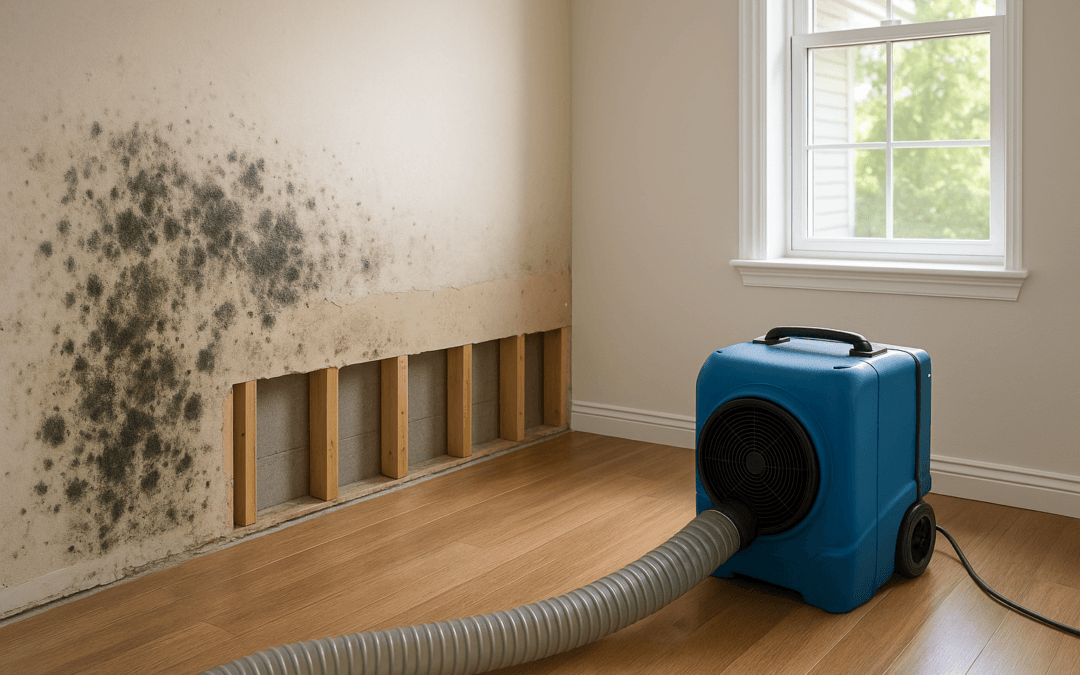
Is it safe to stay in a house during mold remediation?
Short answer up front
Sometimes. It depends on how big the mold problem is, where it is, who lives in the house, and how the remediation is being done. For small, contained jobs you can often stay with reasonable precautions. For larger jobs, or if anyone in the house has health risks, it is safer to relocate until the job is complete.
What the pros do that matters
When a professional crew from a company like Aaron Builders comes in, they will usually follow a clear process that affects whether you can stay:
– Inspect and test to find the mold source and affected areas.
– Set up containment using plastic sheeting and negative air pressure to stop spores from spreading.
– Use HEPA-filtered vacuums and air scrubbers.
– Remove contaminated materials that cannot be cleaned, such as drywall, insulation, or carpet.
– Clean and disinfect remaining surfaces.
– Dry the area and run clearance testing to confirm spore levels are back to normal.
If containment and negative air pressure are properly used, most of the work is done with dust and spores kept inside the work area. That makes staying possible for many homeowners.
When you should definitely leave
You should not stay in the house if any of the following apply:
– The remediation is whole-house or covers multiple rooms.
– The work involves removal of large amounts of contaminated materials.
– Someone in the home is pregnant, very young, elderly, or has asthma, allergies, or a weakened immune system.
– There is a strong, lingering musty smell or visible spores spread beyond the work area.
– The contractor recommends temporary relocation after an initial inspection.
Practical tips if you choose to stay
If you stay during remediation, follow these steps:
– Ask the contractor to seal the work area and run HEPA air scrubbers.
– Turn off central HVAC that could spread spores, or have the HVAC ducts sealed.
– Keep all doors to the work area closed.
– Move personal items, especially clothing and bedding, away from the work zone.
– Avoid going into the work area and limit time near it.
– Request a clearance test before resuming normal living in the space.
Local note for Farmington Hills homeowners
Michigan humidity and older home basements can make mold worse. Local crews familiar with Southeast Michigan conditions, like the team at Aaron Builders, know how to set up containment and drying for our climate.
If you are unsure whether it is safe to stay, get a professional assessment. For help, contact Aaron Builders at https://aaronbuilders.com or call their office to discuss your situation and options. They can advise whether temporary relocation makes sense and handle the remediation from inspection through final clearance.